Stained Concrete in Spring Hill, TN
Free estimates. Call (931) 378-6491.
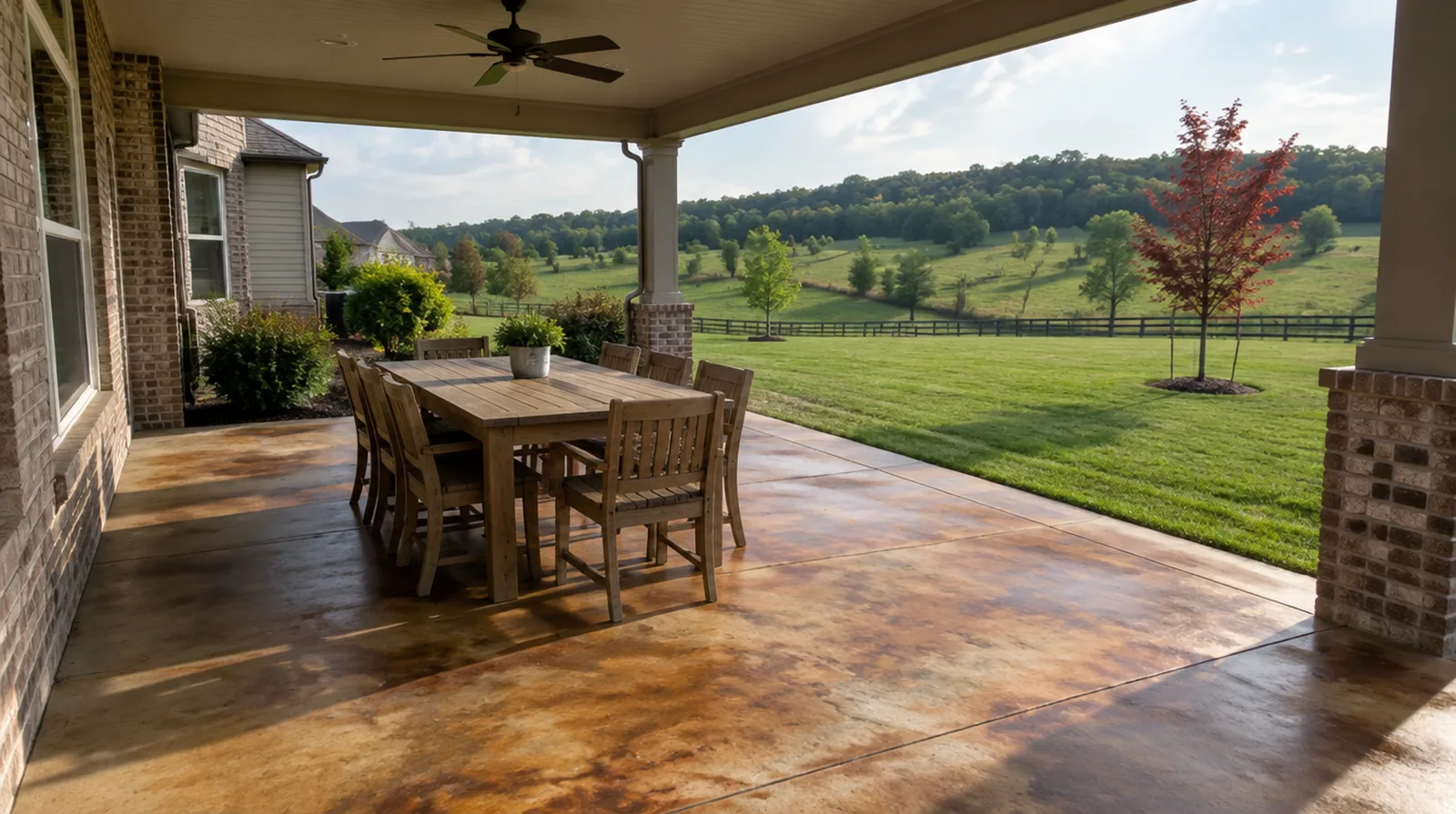
Plain gray concrete is everywhere in Spring Hill's newer subdivisions, on back patios, front porches and garage-turned-gym floors. We stain concrete for homeowners in Spring Hill, TN, using acid and water-based stains to turn new or existing slabs into rich, mottled color that looks like stone or leather.
From farm town to fast-growing suburb
For most of its history Spring Hill was a small crossroads town known for the 1864 Civil War battle and antebellum homes like Rippavilla. That changed when General Motors chose the town for its Saturn plant, which started building cars in 1990. Since then, neighborhoods have spread across the farmland on both the Maury County and Williamson County sides of town. Most of those houses have concrete patios, porches, walkways and garage floors, and almost all of it was poured gray. Staining is one of the most affordable ways to make that concrete look custom.
Acid stain vs. water-based stain
Acid (reactive) stain contains metallic salts that react with the lime in the concrete. The color is not a coating; it becomes part of the surface. Results are variegated and earthy, in browns, ambers, tans and soft greens, with natural mottling that no two slabs share. It is our go-to for patios and porches where owners want a stone or aged-leather look.
Water-based stain soaks into the pores and gives more predictable color, including grays, blacks, blues and whites that acid stain cannot make. It suits modern homes, interior floors and projects where you want the color to match a sample closely.
We can also combine the two: an acid base with water-based accents, or two acid colors layered for depth.
What makes a slab stainable
Stain only works on bare, porous concrete. Before quoting, we check:
- Sealers and curing compounds. Many builders spray a cure-and-seal on fresh slabs. That film blocks stain, so it has to be stripped or ground off first.
- Age. New concrete should cure for about a month before acid stain goes on.
- Patches and repairs. Patched areas take color differently, which can show. We point those out so there are no surprises.
- Stains and oil. Grease, fertilizer rust and tire marks are cleaned or degreased; deep ones may remain faintly visible.
We do a small test spot on your slab before committing to a color.
Built for Middle Tennessee weather
Spring Hill summers are hot and humid, spring brings heavy thunderstorms, and winter mixes cold rain with freezes and the occasional ice storm. Stained exterior concrete needs a good sealer to hold up to all of that. We use breathable, UV-stable sealers that let moisture vapor out of the slab, which is important here because the clay soils over limestone stay damp much of the year. On walkways, porches and pool surrounds, we add a fine anti-slip grit to the sealer, since a glossy surface can get slick when rain blows under a porch roof.
Avoid de-icing salts on stained and sealed concrete in winter. Sand or a product labeled safe for concrete works better and protects both the finish and the slab.
Interior floors and shops
Stained concrete is popular inside too: bonus rooms over slab foundations, home gyms, finished garages, workshops and small offices. Inside we can polish the surface before staining or finish with a durable topcoat or wax for a soft sheen. It is easy to clean, works with radiant heat and gives allergy sufferers a carpet-free option.
Our process
- Clean, degrease and, if needed, strip or grind off existing sealers.
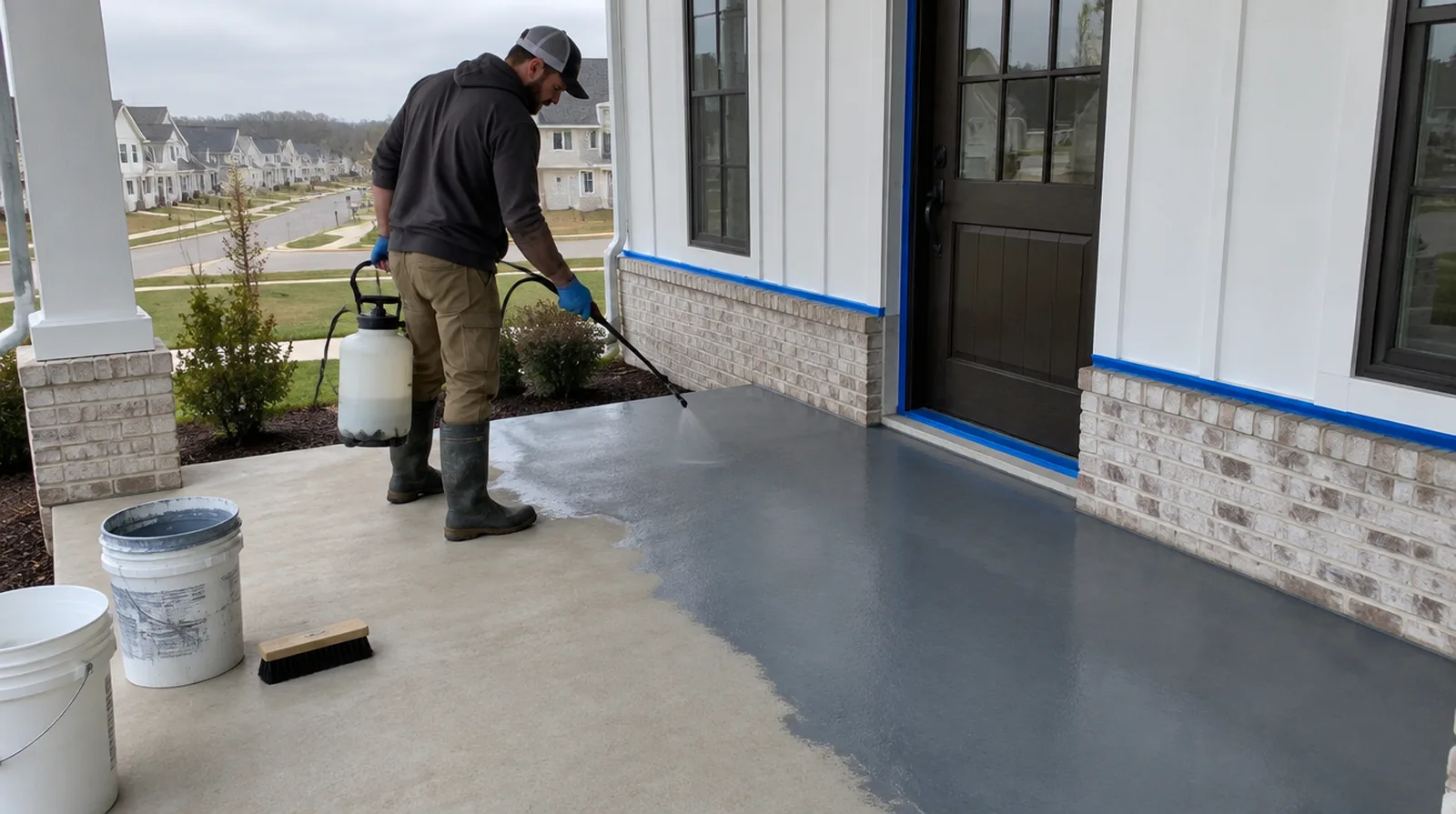
- Mask walls, doors, siding and landscaping.
- Apply stain in one or more coats, working to the look agreed on during testing.
- Neutralize and rinse acid stain residue thoroughly.
- Seal the surface, with anti-slip additive where it is needed.
Most patios and porches take two to three days including dry time.
Pairing stain with new concrete
If you are pouring a new patio, we can plan the stain from the start. See our concrete patios service, or compare staining with patterned stamped concrete. Cracked or uneven slabs should be fixed before any color goes on; our concrete repair team can handle that first.
Common questions
Will stain hide cracks?
No. Stain is translucent, so cracks and patches stay visible. Many owners like that natural, aged look.
How often should it be resealed?
Exterior surfaces usually need resealing every two to three years, depending on sun and traffic.
Can you stain a driveway?
Yes, but tires and oil wear the sealer faster, so plan on more frequent upkeep.
Want color on your Spring Hill concrete? Call (931) 378-6491 for a free visit. We will test your slab, show color samples and give you a written price.
Get a Free Estimate
Tell us what you need poured, repaired or replaced. We'll get back to you with a time to come look at it. Name and phone are all we need to start.
Want color on your Spring Hill concrete?
Call (931) 378-6491 for a free visit. We will test your slab, show color samples and give you a written price.