Concrete Sealing in Spring Hill, TN
Free estimates. Call (931) 378-6491.
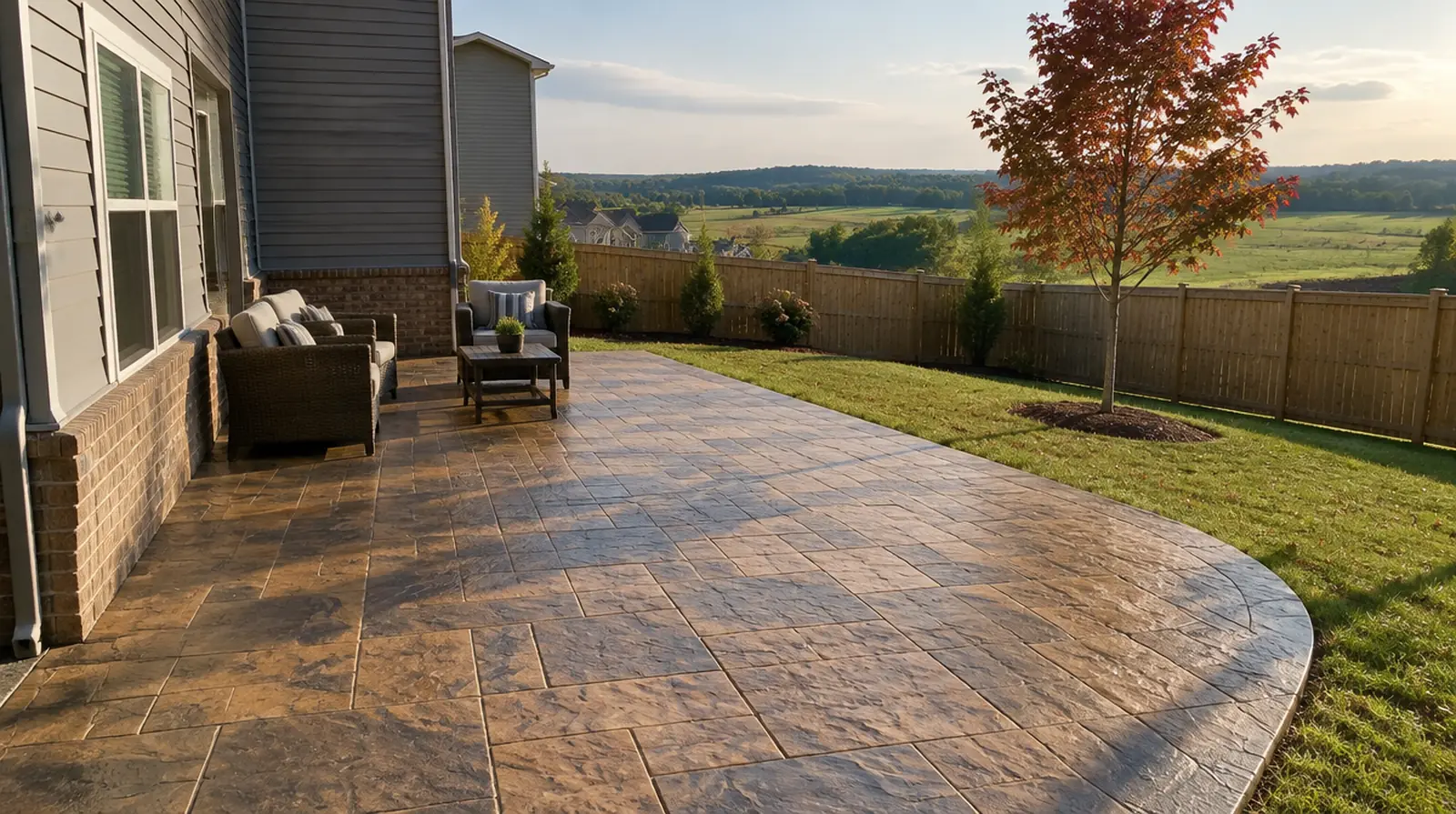
Concrete looks great the day it is poured. Then come the red clay tracks, the oil drips, the green film on the shady side and the first winter's freeze. We seal concrete in Spring Hill, TN, protecting driveways, patios, walks and stamped surfaces so they stay cleaner and last longer.
What concrete faces in Spring Hill
Spring Hill sits on the line between Maury and Williamson counties, and many of its neighborhoods were built in the last twenty years on farmland with heavy red clay. That clay ends up on driveways and walks from every rain, construction lot and garden bed, and it stains bare concrete easily. Middle Tennessee summers are hot and humid, which feeds mildew and algae in shady spots. Winters are milder than up north, but the area still sees many nights below freezing, and any water inside the concrete expands when it freezes.
Unsealed concrete is porous. It soaks up water, oil, fertilizer, leaf tannins and clay. A good sealer slows all of that down.
Two kinds of sealer
Penetrating sealers, typically silane or siloxane based, soak into the surface and react to form a water-repellent barrier inside the pores. They do not change the look of the concrete or make it slippery. They are our usual choice for broom-finished driveways, sidewalks and garage aprons, where traction and freeze resistance matter most. They also reduce damage from deicing salts on the occasional icy morning.
Film-forming sealers, usually acrylic, sit on the surface and give a wet look or satin sheen that brings out color. They are the standard for stamped and stained concrete. They need recoating every two to three years, more often in full sun, because UV and foot traffic wear them down.
We match the product to the surface and how you use it. Our stamped concrete and stained concrete customers usually come back to us for resealing on a regular schedule.
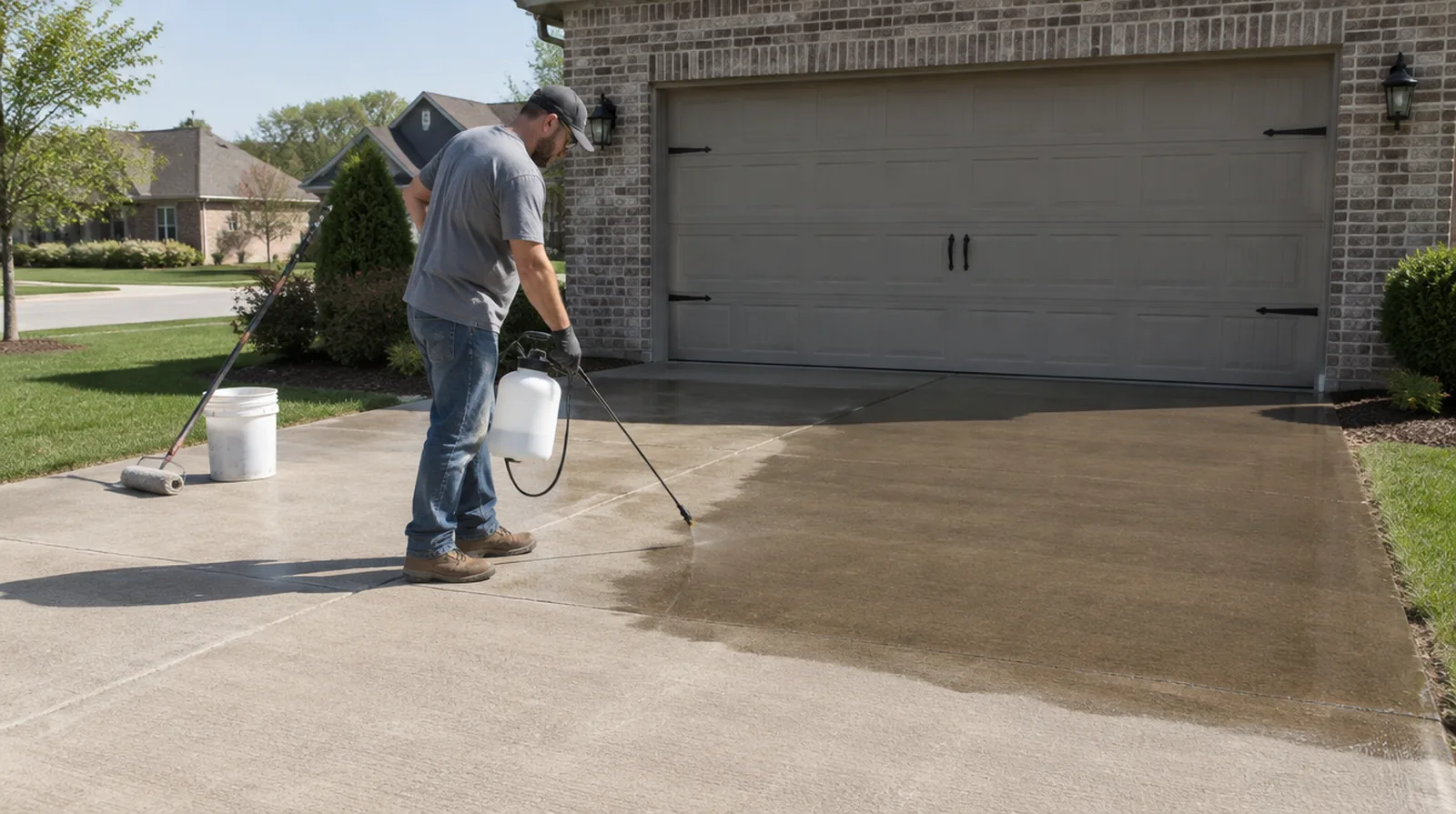
Cleaning comes first
Sealer locks in whatever is on the surface, so prep matters. We pressure wash the concrete, treat oil and rust spots, and remove clay stains as much as possible. Mildew is treated so it does not grow back under a film sealer. On older stamped patios, cloudy or peeling sealer is stripped or reactivated before a fresh coat goes on. Peeling usually comes from too-thick coats or moisture trapped under the film, and we fix it rather than paint over it.
New concrete
Fresh concrete needs to cure before most sealers go on. For penetrating sealers, we usually wait about four weeks. Some curing-and-sealing products can be applied the day the concrete is finished, and many new pours in Spring Hill get one. If you had a driveway or patio poured recently, ask us when it should be sealed. See our concrete driveways and concrete patios pages for new work.
Best times to seal
Sealers cure best in dry weather between roughly 50 and 90 degrees. In Spring Hill, that makes April through early June and September through October ideal. Mid-summer work is done early in the morning, before the slab gets hot. We avoid days with rain in the forecast, since most products need several dry hours to set.
Signs it is time to reseal
- Water soaks in and darkens the concrete instead of beading.
- A stamped patio looks chalky or faded.
- Stains seem to set in faster than they used to.
- Small flakes or pits appear on the surface after winter.
Pool decks and porches
Pool decks and covered porches need sealing too. Pool chemicals and splash-out break down unprotected concrete, and a sealed deck is far easier to keep clean. On covered porches, a light sealer brings out the color and keeps pollen and dirt from settling into the pores. We pick slip-resistant options for any surface that gets wet, and we explain how often each one should be redone.
Sealing FAQs
Will sealer make my driveway slick?
Penetrating sealers do not. On film sealers, we add a fine anti-slip grit where people walk.
Can sealer fix cracks?
No, cracks should be repaired first. See our concrete repair service.
Do you work nearby?
Yes, in Thompson's Station, Columbia, Franklin and Chapel Hill.
Protect your concrete Call (931) 378-6491. We will look at your concrete, recommend the right sealer and send a written quote.
Get a Free Estimate
Tell us what you need poured, repaired or replaced. We'll get back to you with a time to come look at it. Name and phone are all we need to start.
Protect your concrete
Call (931) 378-6491. We will look at your concrete, recommend the right sealer and send a written quote.